

When we launched Mama Siri in 2020, it was not a grand national strategy. It was an act of survival. Women and girls with disabilities were calling us in distress, facing sexual violence, harmful stigma, denial of SRHR services, and the kind of invisible neglect that breaks confidence long before it breaks the body. Many had nowhere safe to turn.
The systems that should have protected them were simply not built for them.
This isn’t just my lived observation as a disability rights leader. It is confirmed globally: women with disabilities face higher risk of violence, yet their experiences remain under-counted and under-addressed in most national and global violence-related datasets. In 2024, the World Health Organization (WHO) explicitly called for greater attention to violence against women with disabilities, noting the situation is “largely hidden” in many data systems.
So Mama Siri began the way many disability-led innovations begin, with a simple question; if institutions cannot reach us, can we build our own pathway to safety?

MAMA SIRI’S FIRST YEARS: THE WORK NOBODY BUDGETS FOR
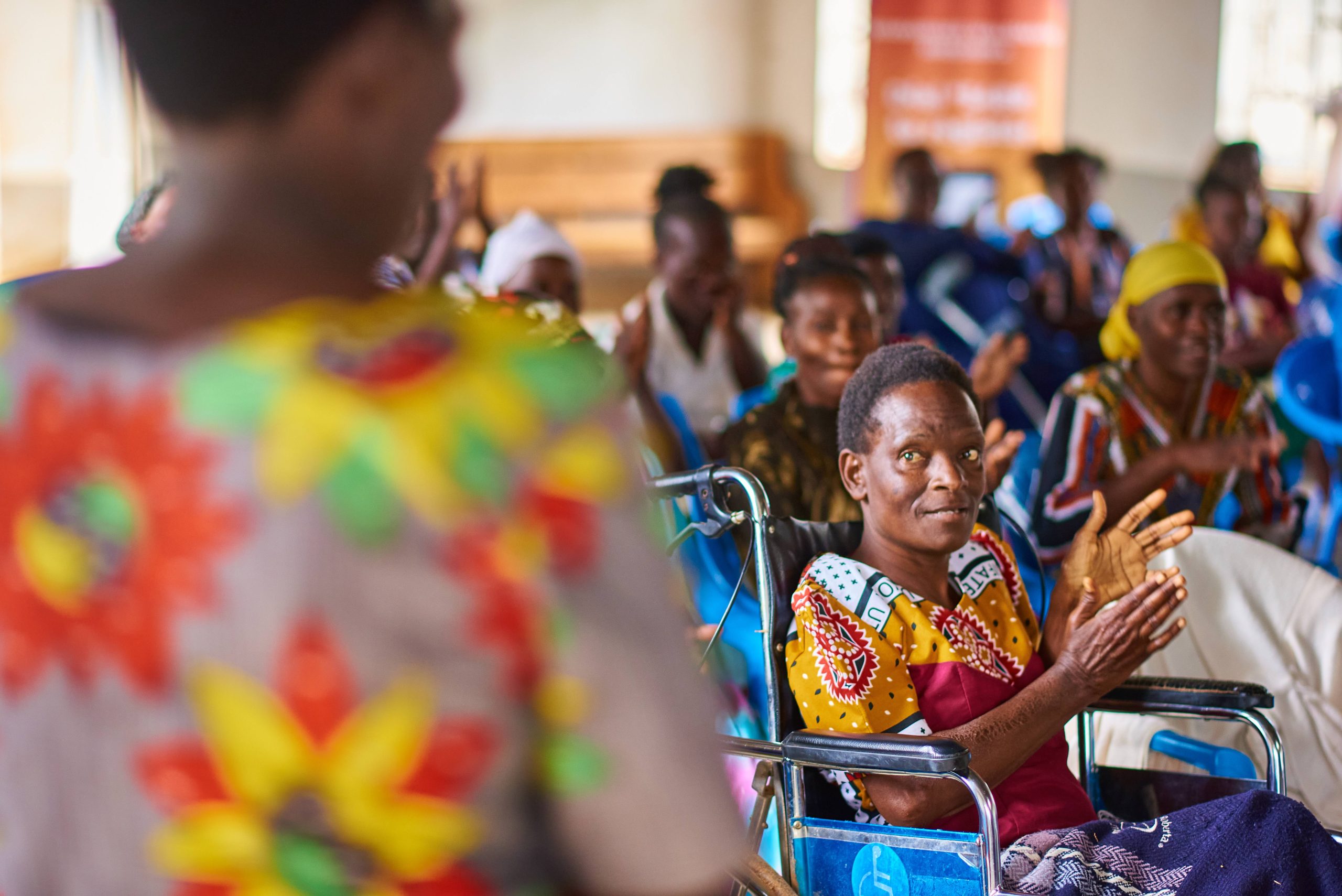
Mama Siri started as a community response network led by women with disabilities themselves; women answering phones, supporting survivors, linking them to services, and using lived experience not as a “story” but as expertise.
At first, the work looked simple from the outside: guidance, referrals, follow-ups, accompaniment, emotional support. But in reality, what Mama Siri was doing was something government systems often fail to plan for, yet communities rely on daily: community care work.
“Care work is labour. It is skilled. It is time-consuming. And it is essential to GBV response.”
And this matters, because research consistently shows that women with disabilities are at heightened risk, including interpersonal violence and intimate partner violence across multiple low and middle income countries.
THEN WE REALISED SOMETHING: EVERY CALL IS DATA
If you work in SRHR or SGBV prevention, you know this truth: much of what women live through never becomes “official data.” Violence is underreported. Service denial is undocumented. Fear is invisible.
So where does the truth live? It lives in patterns. In repeated barriers. In calls that keep coming. Over time, Mama Siri showed us something: community response systems can also be community evidence systems.
UN Women has repeatedly stressed that violence against women with disabilities must be better measured because standard data systems often miss disability dimensions, especially caregiver-perpetrated violence, communication barriers, and hidden settings.
Mama Siri began capturing those signals; not names, not private details but trends:
- a clinic repeatedly refusing SRHR services to women with disabilities,
- a police post where survivors are mocked or dismissed,
- sub-counties where referral pathways collapse,
- increased reports linked to coercion by caregivers or intimate partners,
- digital harassment and tech-facilitated violence rising,
- service gaps that become predictable once you look beyond isolated incidents.
FROM “INCIDENTS” TO “TRENDS”: THE TURNING POINT
There is a big difference between hearing a story and seeing a trend. The turning point for Mama Siri was when we moved from: “A survivor reported violence” to: “This sub-county shows repeat failure points in survivor pathways, and women with disabilities are being locked out of SRHR and justice systems.”
The kind of evidence that moves decision-making because county governments do not plan around anecdotes; they plan around patterns, indicators, and service gaps. And yet disability inclusion has been missing from those patterns for years.
UNFPA has been clear: women and young persons with disabilities face multi-layered barriers in both SRHR and GBV prevention/response, not because they are inherently vulnerable, but because systems exclude them.
WHAT MAMA SIRI PRODUCES TODAY
Today, Mama Siri has evolved into something bigger than a helpline. It is a disability-led platform producing SRHR and SGBV evidence that can strengthen planning and accountability.
Mama Siri generates:
- SRHR and SGBV trend intelligence: Where cases rise, what barriers persist, and what risks are emerging.
- Referral pathway performance signals: Which service links work, which collapse, and where survivors are abandoned between systems.
- Disability inclusion diagnostics: The accessibility failures that block justice and SRHR care: communication barriers, stigma, disbelief, exclusion from facilities.
- Prevention intelligence: Community-level warning signals that can inform targeted prevention and outreach.
Importantly, this is not unique to Kenya, a growing body of global research shows that disability-related exclusion affects how violence is experienced, reported, and responded to.
WHY THIS MATTERS FOR COUNTY GOVERNMENTS
County governments are under increasing pressure to show:
- Measurable progress in GBV response,
- Stronger SRHR delivery,
- Inclusive services for persons with disabilities,
- Accountable budgeting,
- Alignment to human-rights commitments and national disability obligations.
But here is the hard truth: Many counties are still making disability inclusion decisions with missing data.
This is where Mama Siri becomes not only a response mechanism, but a governance tool.
Mama Siri trends can help counties answer practical planning questions:
- Which wards show the highest unmet SRHR needs for women with disabilities?
- Where are survivor pathways failing — health, police, legal aid, shelters?
- Which facilities repeatedly deny access and why?
- Which barriers are most common: transport, stigma, communication, physical access?
- Where should the county invest: inclusive service delivery, referral strengthening, training, community mobilisation?
Without answers to these questions, counties budget blindly and then inclusion becomes ceremonial.
THE FUTURE: A DISABILITY STATUS REPORTING ENGINE
This is why we are now building toward a stronger vision: Disability Status Reports (DSRs) for counties, grounded in real community evidence. Because disability inclusion cannot remain a moral appeal.
It must become a governance practice: data → trends → planning → budgeting → service improvement → accountability.
And Mama Siri has shown that women with disabilities are not only beneficiaries of systems.
They are Responders, Care Workers, Leaders, Advocates, and now Evidence Producers.
This is what meaningful inclusion looks like.
A FINAL INVITATION
In 2020, Mama Siri started as a phone call — a lifeline. In 2026 and beyond, Mama Siri is becoming something bigger: a community intelligence network that can help county governments stop guessing and start governing with clarity.
If counties are serious about reducing SGBV and improving SRHR outcomes for women with disabilities, they must stop treating disability inclusion as an “add-on.” They must treat it as data, evidence, trends, planning and budgeting.
And Mama Siri is ready.
Further Reading:
- WHO (2024): WHO calls for greater attention to violence against women with disabilities and older women https://www.who.int/news/item/27-03-2024-who-calls-for-greater-attention-to-violence-against-women-with-disabilities-and-older-women
- UNFPA (2018): Women and young persons with disabilities — Guidelines (Disability, GBV, SRHR) https://www.unfpa.org/sites/default/files/pub-pdf/UNFPA-WEI_Guidelines_Disability_GBV_SRHR_FINAL_19-11-18_0.pdf
- UN Women (2024): Measuring violence against women with disability https://www.unwomen.org/en/digital-library/publications/2024/03/measuring-violence-against-women-with-disability